
Home inspection insights
How to Read Your Home Inspection Report
By Cooper Home Inspections · October 15, 2026
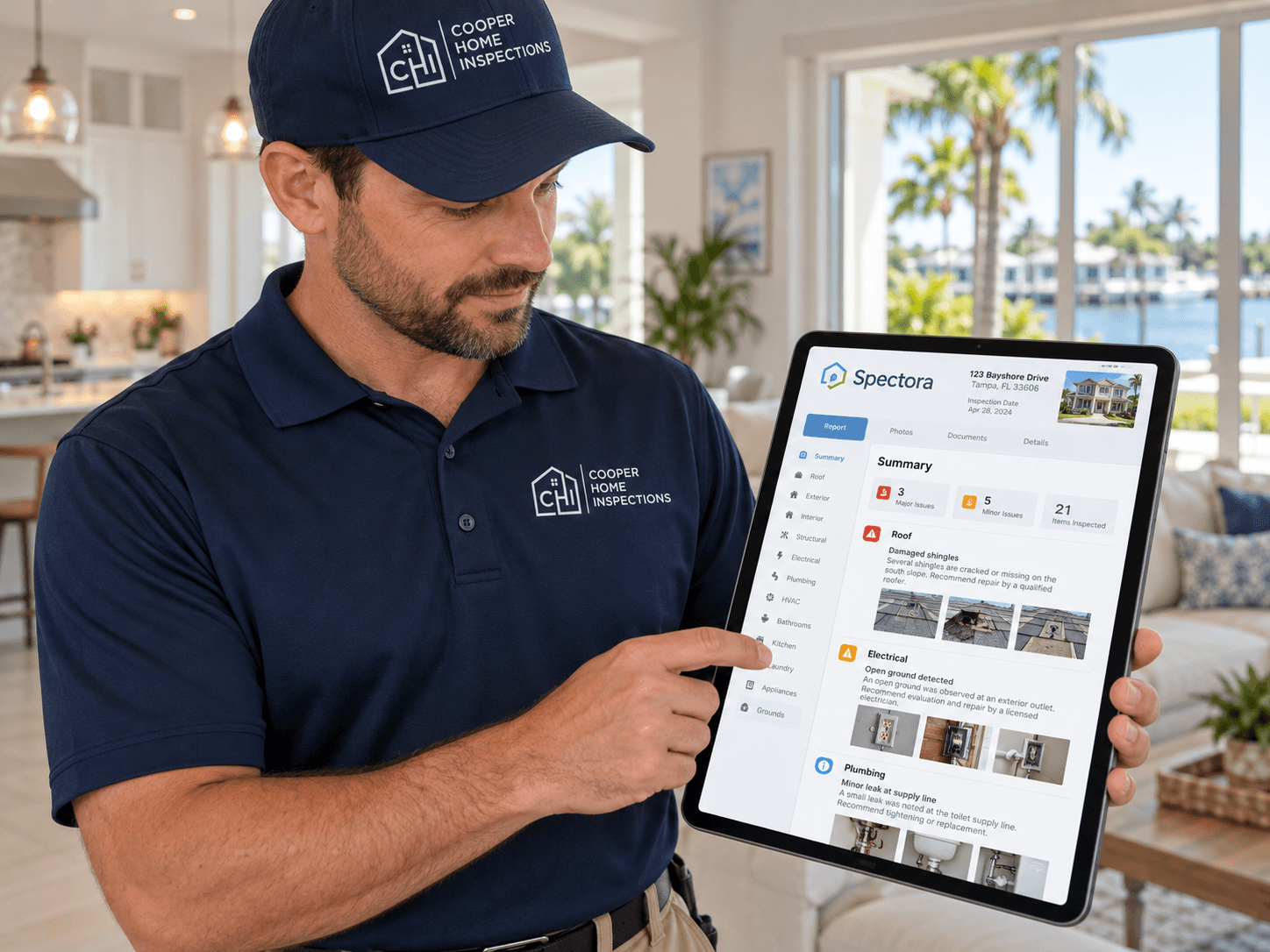
Your home inspection report contains more than a list of things that need fixing. It explains the home’s accessible systems, documents conditions observed during the inspection, and recommends next steps.
At Cooper Home Inspections, we organize that information by system and use blue, orange, and red categories to help you understand the findings. Knowing how the report is laid out makes it easier to recognize what needs prompt attention, what deserves further evaluation, and what belongs on your maintenance list.
Start with the inspection details
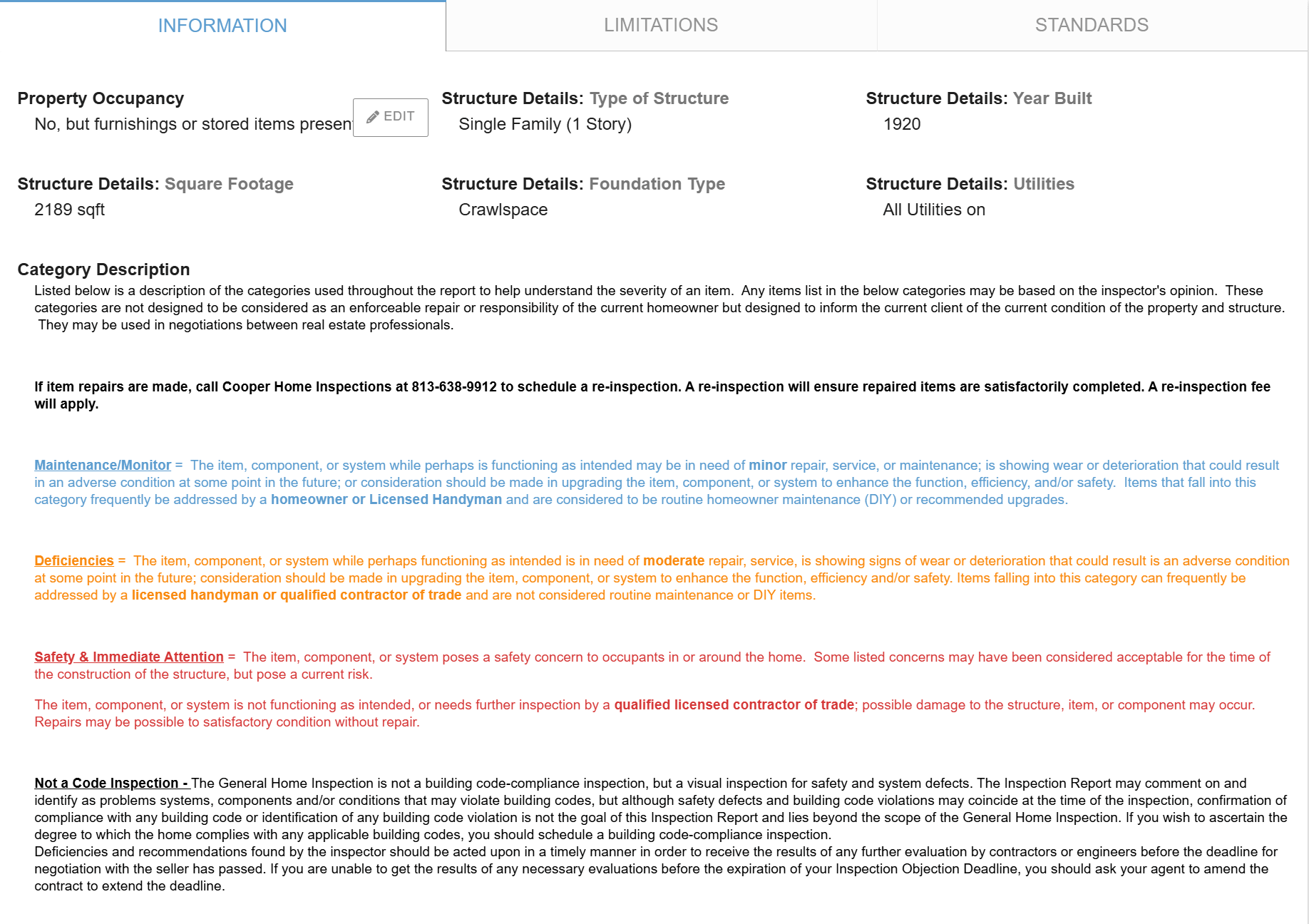
The Inspection Details section explains the scope of the inspection, the property information, and the categories used throughout your report. It also describes limitations that affect what we can inspect.
A home inspection is a visual evaluation of accessible conditions at the time of the visit. Furniture, stored belongings, inaccessible attic areas, and concealed components can limit what is visible. Reading these details helps you understand both the findings and the areas where additional information may be needed.
Use the summary to get oriented
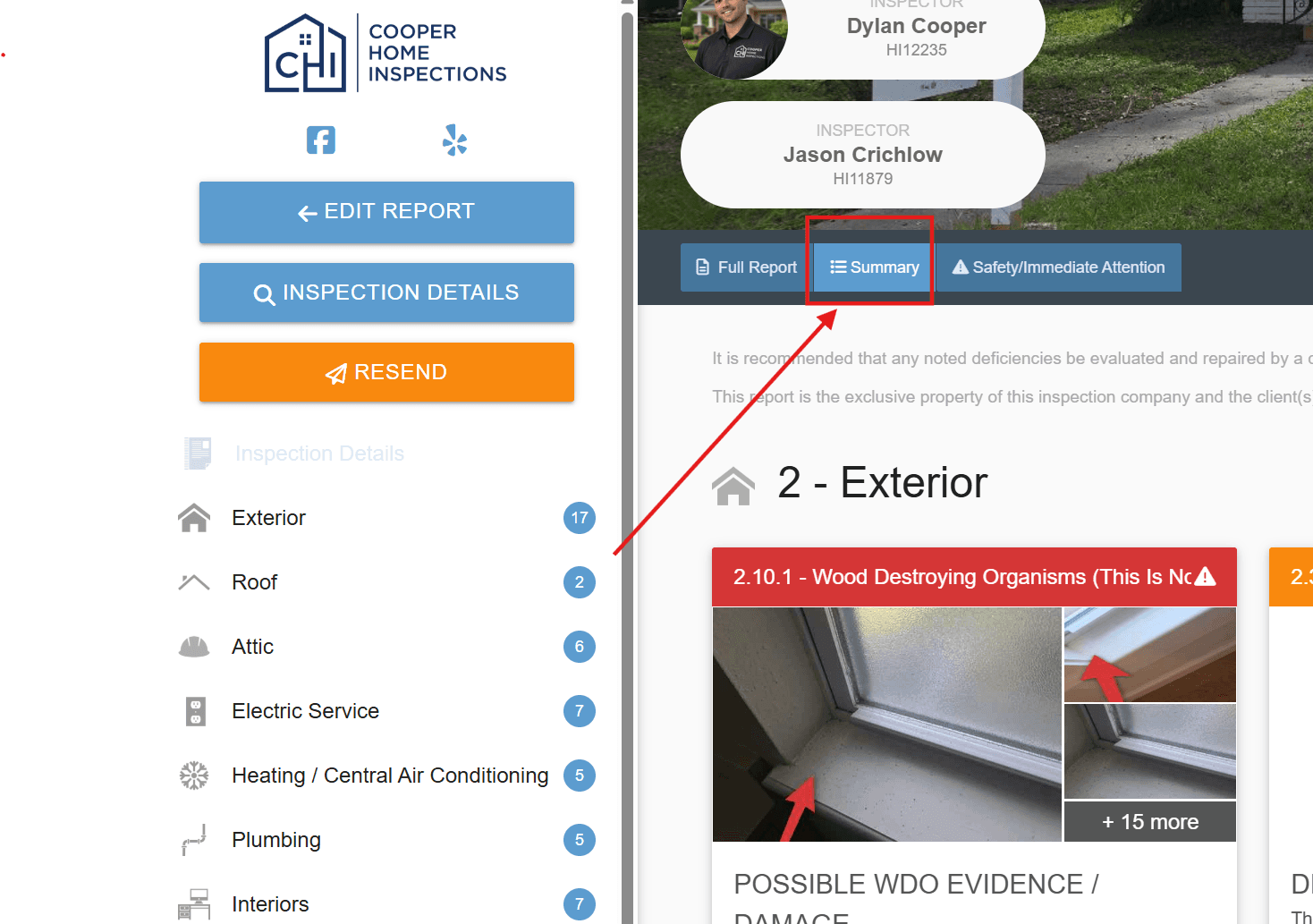
The summary brings the report’s recommendations together into a convenient list. Each entry includes a reference number, the system or component, and a short finding title.
For example, an entry such as “5.1.5 — Missing Deadfront Cover” points you to a specific finding in the electrical section. Those reference numbers are useful when asking us a question, requesting a contractor’s estimate, or discussing repairs with your real estate agent.
Start with the summary to see the overall picture, then read the complete findings. A short title cannot explain everything the inspector observed or why a particular next step was recommended.
Understand the blue orange and red categories
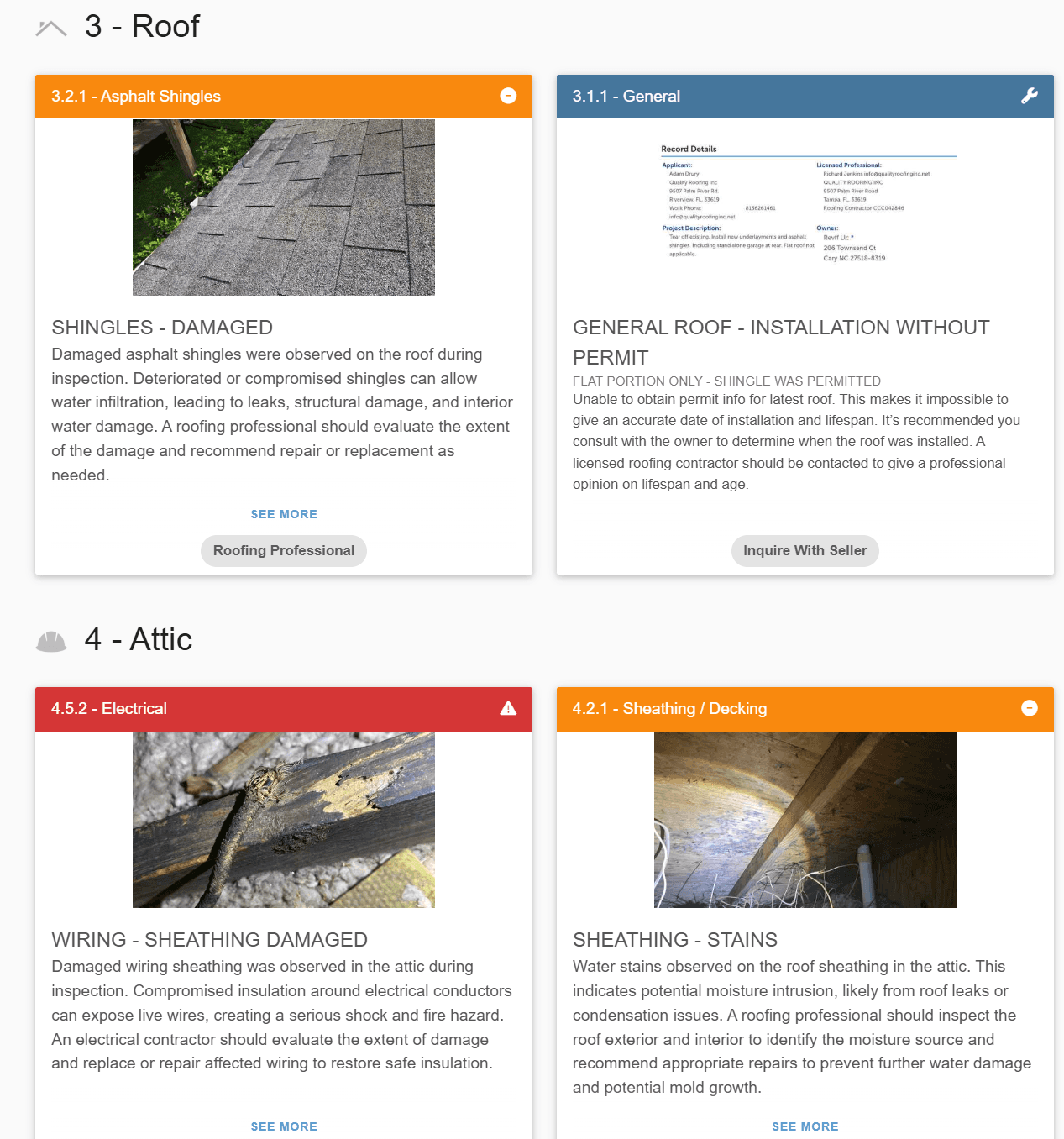
The colors help you prioritize the report. They describe the nature of a finding; they do not tell you the repair cost or automatically determine who is responsible for the work.
Blue means maintenance or monitoring
Blue items generally involve routine upkeep, minor repairs, monitoring, or recommended improvements. A component may still work while showing wear or needing attention.
In the example report, hairline exterior cracking was marked as a blue Maintenance Item. The recommendation was to have a stucco repair contractor evaluate the cracks and recommend appropriate patching or sealing.
That is a useful maintenance task. The finding by itself does not establish structural failure, but it should still be addressed to help limit moisture intrusion.
Missing window screens were another blue example. They belong on the homeowner’s task list, with a different priority from exposed electrical components.
Blue does not mean “ignore.” Read the recommendation to understand whether the item needs maintenance, professional advice, or continued observation.
Orange means a deficiency
Orange findings identify conditions that need repair, service, or further evaluation beyond routine upkeep. A system may still operate, but its condition warrants attention from an appropriate professional.
The example report included an orange finding for a damaged cast iron drain line in the crawlspace. The recommendation called for a plumbing contractor to evaluate the damage and determine whether repair or replacement of the affected section was necessary.
That recommendation gives you a next step. It does not establish the condition of every drainpipe or provide a final repair price.
An orange item can also involve safety. For example, an exterior GFCI receptacle that did not respond properly to testing was classified as a deficiency and referred to an electrical contractor. Read the explanation along with the color.
Red means safety or immediate attention
Red findings identify safety concerns or conditions requiring immediate attention. Read these first and arrange the recommended professional follow-up promptly.
In the example report, a missing electrical panel deadfront cover was marked red because it left electrical components exposed to accidental contact. A damaged circuit breaker was also classified as Safety/Immediate Attention.
These findings should take priority over routine maintenance. Keep people away from exposed electrical components and have a qualified electrician address the conditions.
A red finding does not automatically mean the entire system needs replacement. It means the condition requires prompt attention, with the repair scope determined by the appropriate professional.
Read each finding as a complete explanation
Within the system sections—such as Exterior, Roof, Electric Service, Plumbing, and Interiors—individual findings bring several pieces of information together:
- Reference number and title: Identify the component and reported condition.
- Location, when provided: Help you or a contractor find the area.
- Description: Explain what was observed, why it matters, and any uncertainty.
- Photos or supporting media: Document the inspected condition.
- Recommendation: Explain the next step and, when appropriate, the type of professional to contact.
- Category: Help you prioritize the finding.
Read these pieces together. A photo shows the visible condition, while the written description explains what the inspector concluded and what remains unknown.
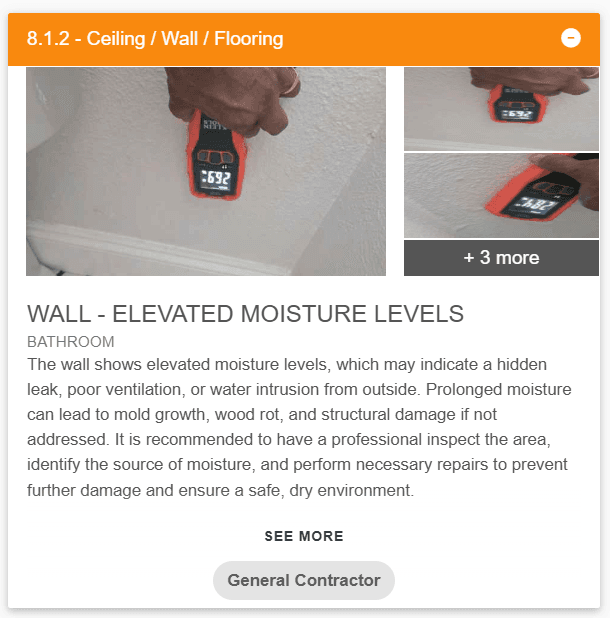
For example, a moisture meter photo supports a moisture finding. It does not, by itself, identify the water source or establish the extent of concealed damage.
What the recommendations mean
The recommendation is where a finding becomes an action item. The wording matters because different conditions require different next steps.
Contact a qualified professional
This means the finding needs appropriate expertise. Read the description to understand the type of evaluation needed, particularly when the recommendation uses a general description rather than naming a specific trade.
If you are unsure whom to contact, ask us to clarify the recommendation.
Further evaluation
Further evaluation means additional investigation is needed to establish the cause, extent, or appropriate correction.
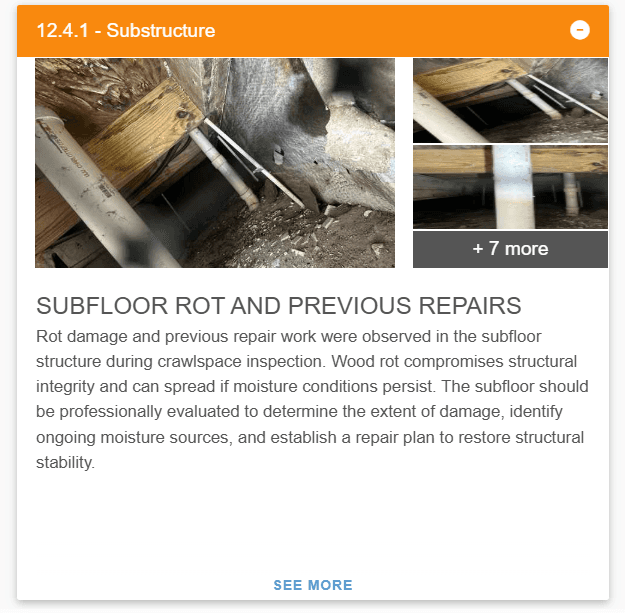
For example, the report documented subfloor rot and previous repairs in a crawlspace. Professional evaluation was recommended to determine the extent of damage, investigate moisture sources, and establish a repair plan.
The visible evidence justified follow-up, but a visual inspection could not establish every concealed condition or the complete repair scope.
Repair or replace as necessary
This wording allows for the appropriate professional to determine the correction after evaluating the component.
A finding does not always mean complete replacement. Depending on the condition, a repair may be suitable, or replacement may be necessary. Obtain a clear scope before making assumptions about cost.
Monitor
Monitoring means watching for recurrence or change. It works best when you understand what to watch for and when to seek further help.
In the example report, a ceiling stain was dry when inspected. The report recommended checking the repair history and monitoring for future leaks because the original source might already have been corrected.
A separate finding documented elevated bathroom wall moisture and recommended professional investigation. Although both involved moisture concerns, the observations supported different next steps.
Read the information and limitations too
Not every report entry describes a defect. Information sections record system details, materials, equipment, and general observations.
Limitations explain where visibility, access, or testing was restricted. An inaccessible area should not be treated as an area confirmed to be free of problems. If a limitation affects something important to your decision, discuss the available follow-up with your inspector.
These sections provide context that a summary alone cannot offer.
Turn your report into a practical next step
After reading the full report, make a short action list:
- Address red findings promptly. Arrange the recommended professional assistance and clarify any precautions.
- Schedule orange-item evaluations. Obtain repair scopes and estimates while you still have time to consider them.
- Plan blue-item maintenance. Record the work or monitoring needed and set a reasonable schedule.
- Keep the report references. Use finding numbers when communicating with contractors, your agent, or our team.
- Document completed work. Keep invoices and repair records, and discuss whether a reinspection is appropriate.
The number of findings is only one part of the picture. Their consequences, recommended follow-up, and repair scope are more useful when deciding what deserves your attention.
Questions about your Cooper home inspection report
You do not have to interpret an unfamiliar finding on your own. If you need help understanding a category, a photo, or a recommendation, contact Cooper Home Inspections.
Our goal is to help you understand the conditions documented in your report so you can prioritize the work and make informed decisions about your home.