
Home inspection insights
What Does a Tampa Home Inspection Include?
By Cooper Home Inspections · September 30, 2026
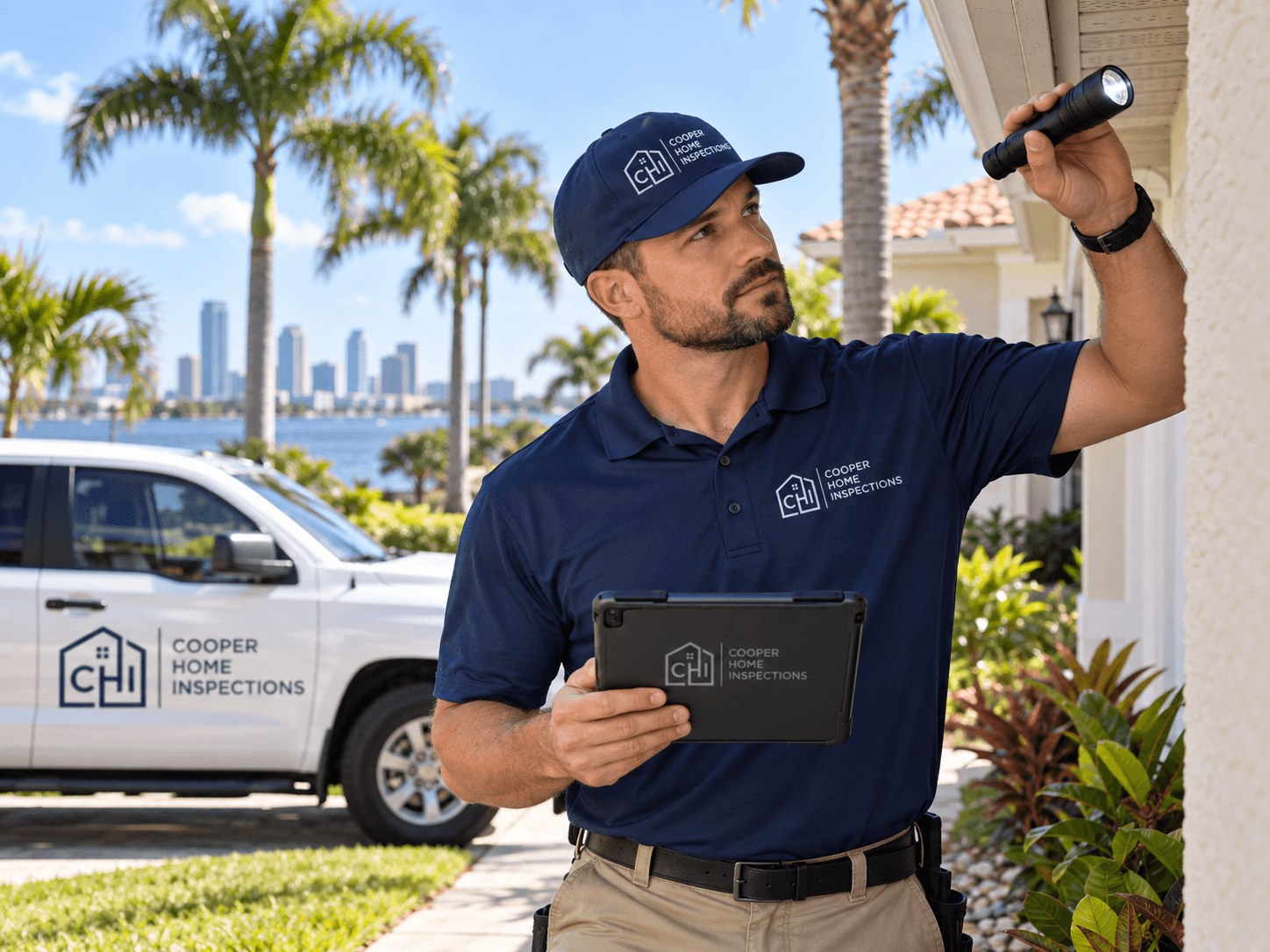
What Does a Tampa Home Inspection Include?
A Tampa home inspection is a visual evaluation of a home's major systems, done before you close so you know what you're buying. Between the heat, humidity, heavy summer rain, and hurricane season, Tampa Bay homes face stress that homes in many other parts of the country don't. A thorough local inspection goes well beyond the basics.
This guide covers what a home inspection in Tampa, FL typically includes, what it doesn't, and what real findings look like. Throughout the post, you'll see examples from a recent Cooper Home Inspections report on a 1920s Tampa home.
What Is a Home Inspection?
A home inspection is a non-invasive, visual assessment of a property's condition on the day of the inspection. Your inspector documents what they find and delivers a written report with photos so you can make informed decisions. It isn't a pass/fail test or a guarantee of future performance. It's a detailed snapshot of the home's condition. At Cooper Home Inspections, reports are delivered digitally within 24 hours, and many arrive the same day.
Roof Inspection
In Florida, the roof is often the most important and most expensive component of the home. During a Tampa home inspection, your inspector will look at:
- Shingle, tile, or metal condition and signs of aging
- Missing, cracked, or lifted materials
- Flashing around chimneys, vents, and skylights
- Gutters, downspouts, and drainage
- Signs of past or active leaks
What we found: On a recent inspection, the flashing where the chimney meets the roof was damaged and substandard. Flashing is the metal seal that keeps water out of that gap. When it fails, water can get into the roof system and cause leaks, interior water damage, and structural deterioration. We recommended a roofing or chimney contractor repair or replace it to restore a watertight seal.
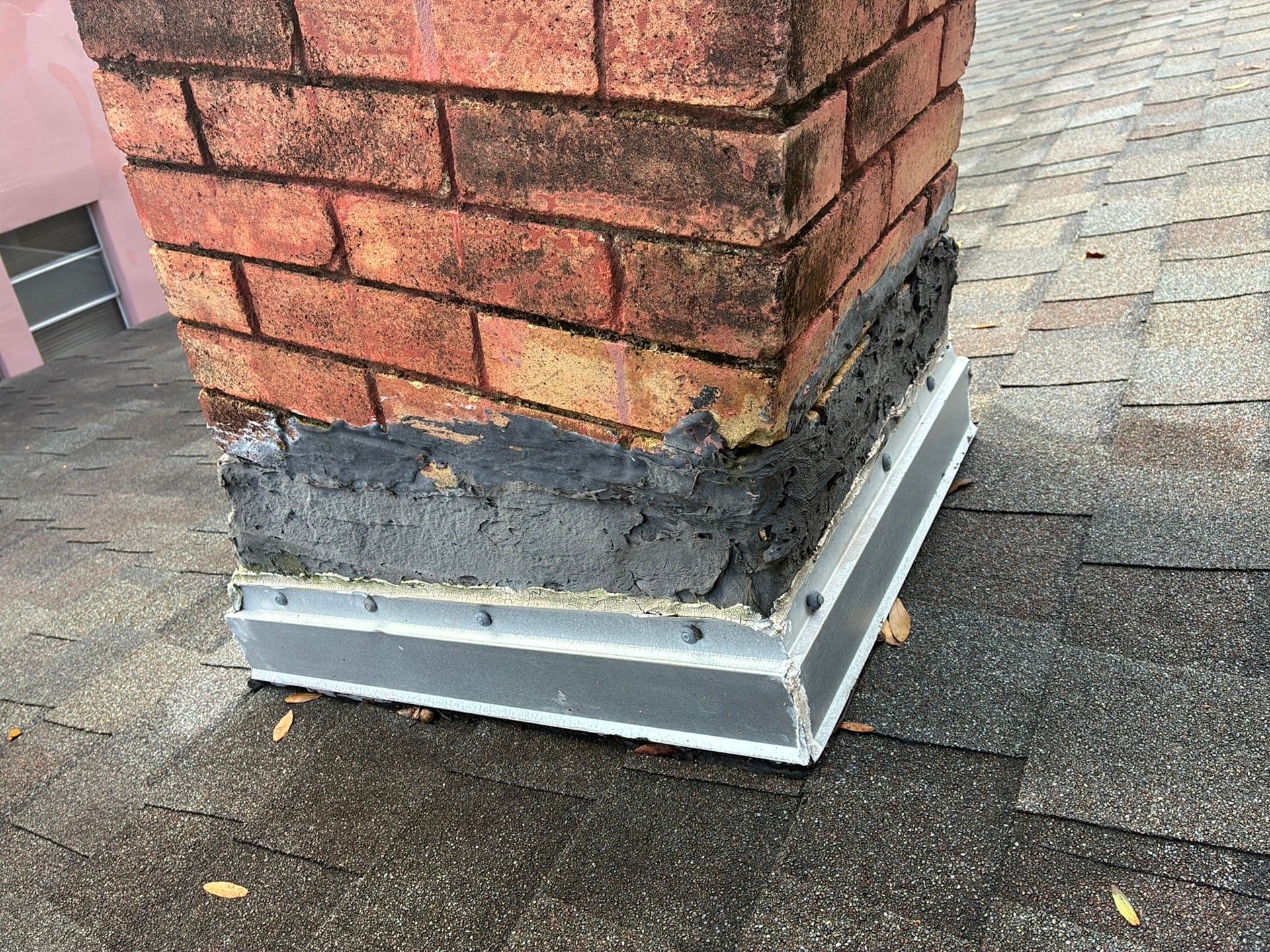
Damaged chimney flashing found during a recent Cooper Home Inspections roof inspection.
Roof age directly affects insurability in Florida, so this section of your report often carries real weight in your purchase decision. If insurance is a concern, ask about a 4-point inspection or a wind mitigation inspection.
Exterior and Structural Components
Your inspector evaluates the outside of the home, and the crawlspace or slab where accessible, for anything that could let water in or point to structural problems:
- Siding, stucco, and trim condition
- Windows and doors, including seals and operation
- Grading and drainage around the home
- Driveways, walkways, and porches
- Visible foundation, slab, or crawlspace conditions
What we found: In the crawlspace of an older Tampa home, we documented fungal rot, staining, and possible wood-destroying organism damage on wood components throughout the space. That points to active or past moisture intrusion and decay that can affect structural integrity. We flagged it as a safety and immediate-attention item and recommended a structural engineer evaluate the extent of the damage.
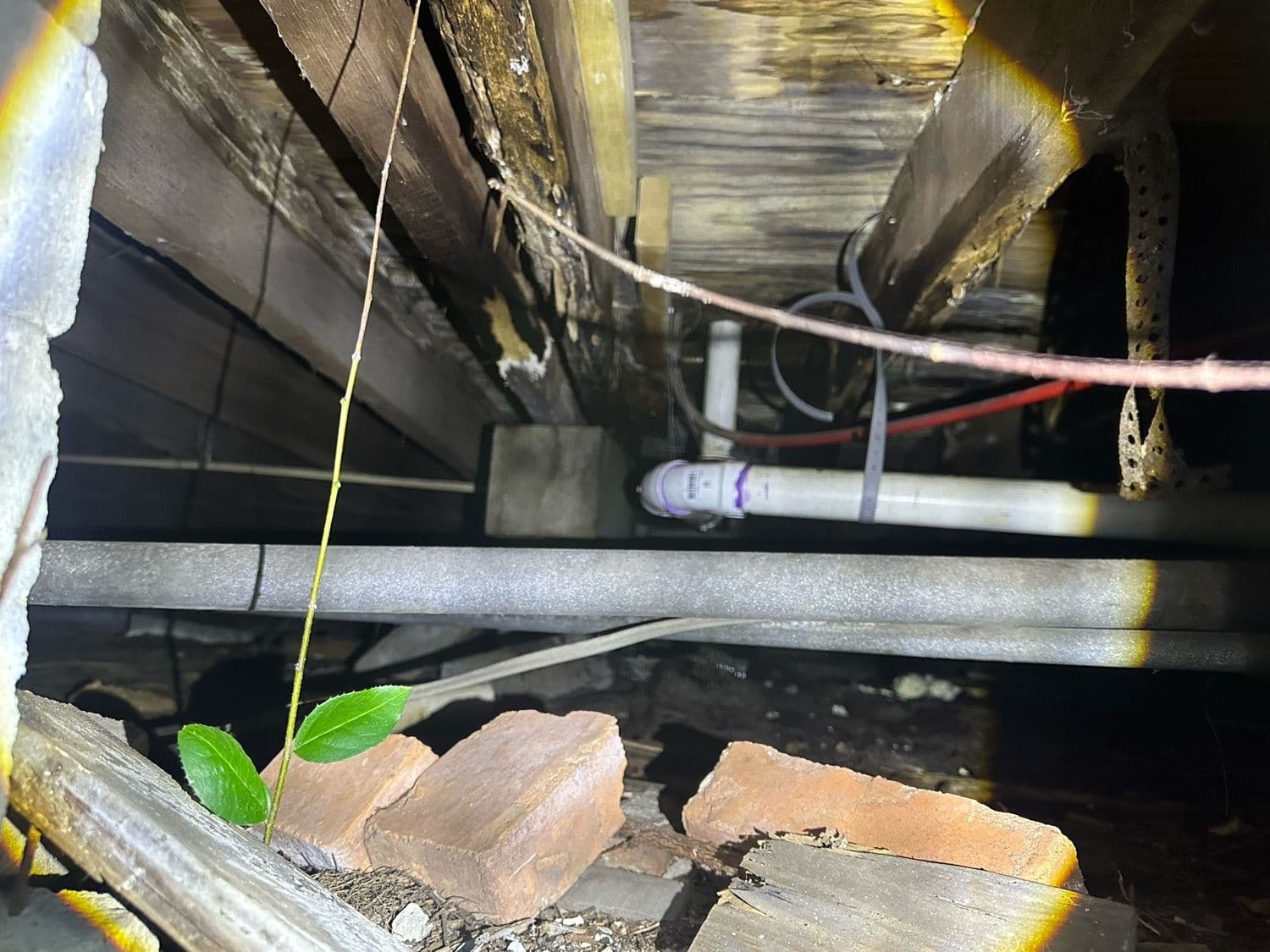
Wood rot and staining on crawlspace framing, photographed during a Cooper home inspection.
Stucco is also common across Tampa Bay, and moisture intrusion behind it can go unnoticed for years, so exterior details deserve close attention.
Attic and Insulation
Tampa attics get extremely hot, and they reveal a lot about a home. Your inspector checks ventilation, insulation levels, roof decking from below, and signs of moisture, pests, or past repairs. Attic conditions also affect your energy bills and how hard your HVAC system has to work.
What we found: Rat traps in the attic told us there was active or recent rodent activity. Rodents can contaminate insulation with droppings and urine and damage wiring and framing by gnawing. We recommended a pest control professional find the entry points, remove the rodents, and seal the home against future infestations. The same attic also showed water stains and deterioration on the roof sheathing, which called for a roofing evaluation.
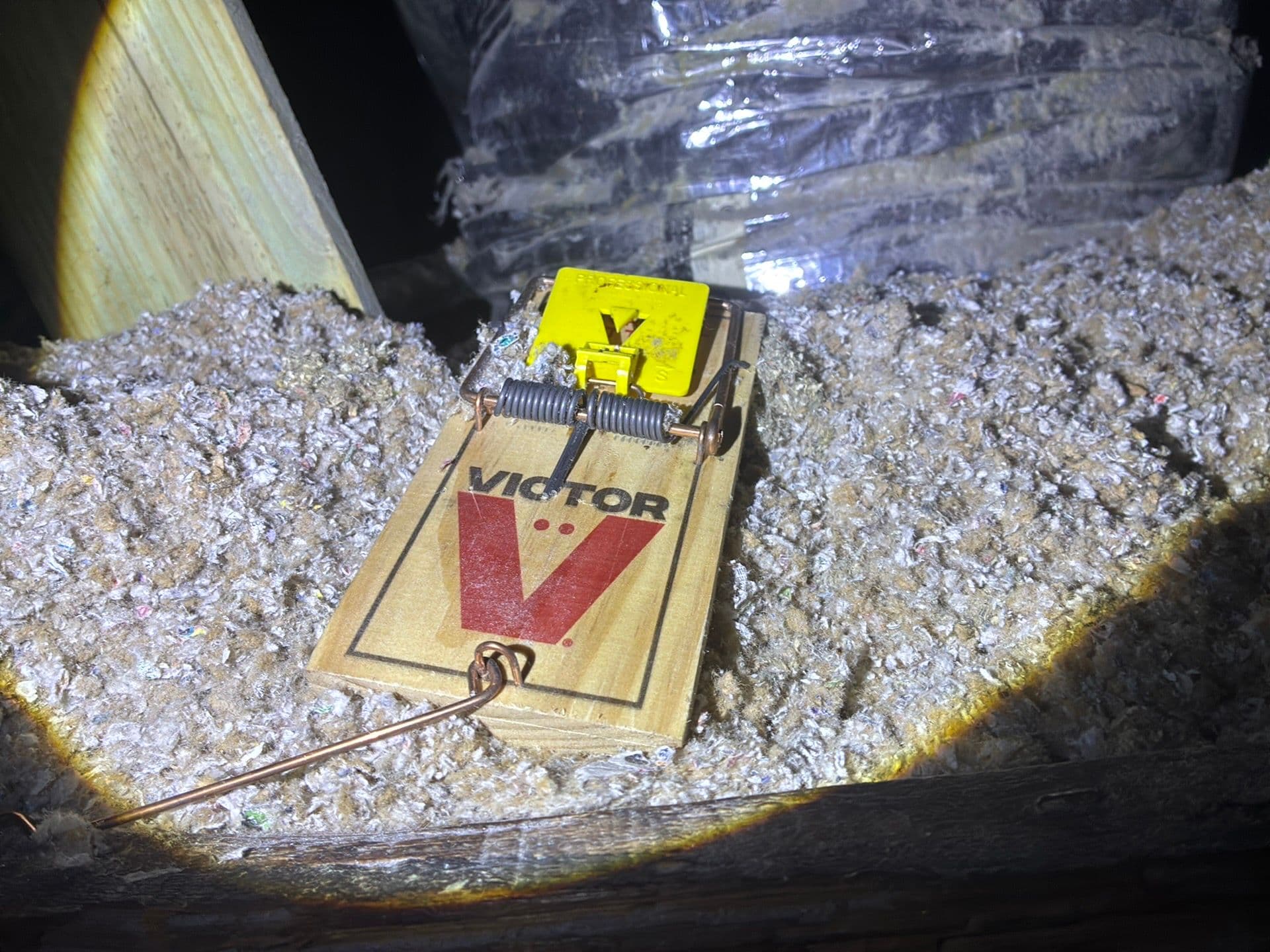
A rat trap on attic insulation, a sign of rodent activity, found during a Cooper home inspection.
Electrical System
Safety is the priority in the electrical portion of your inspection. The inspector will evaluate:
- The main service panel and breakers
- Visible wiring and grounding
- Outlets, switches, and fixtures
- GFCI and AFCI protection where applicable
- Smoke and carbon monoxide detectors
What we found: Inside the main panel, several neutral wires were double-tapped, meaning two or more wires were connected to a single terminal. That can lead to overheating, improper circuit operation, and a potential fire hazard. We recommended a licensed electrician correct it by redistributing the neutrals or adding a terminal.
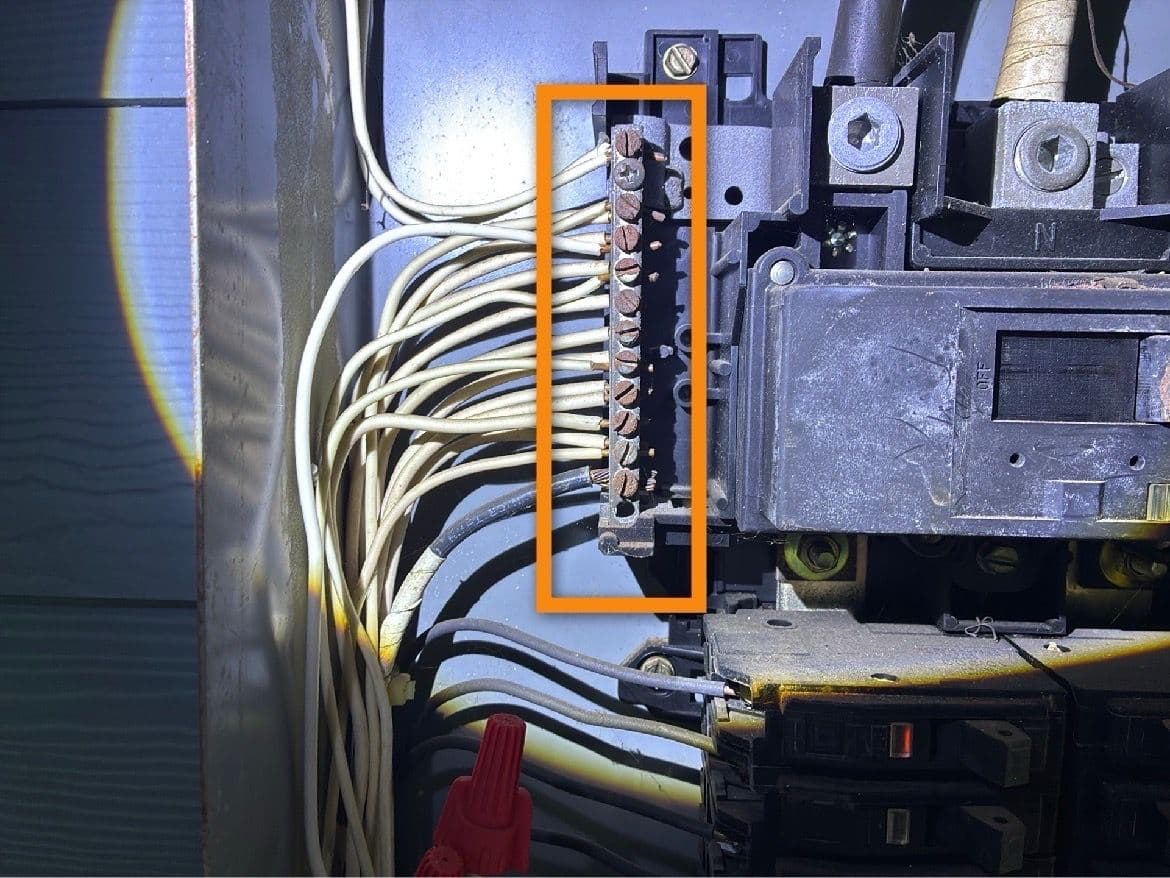
Double-tapped neutral wires, outlined by the inspector, inside a main electrical panel.
Older Tampa homes may also have outdated panels or wiring methods that should be evaluated further by a licensed electrician.
Plumbing System
Expect a review of supply lines, drain lines, the water heater, fixtures, and visible signs of leaks. Inspectors note the pipe materials they see, since some older materials carry a higher risk of problems. Water pressure and drainage performance are checked as well.
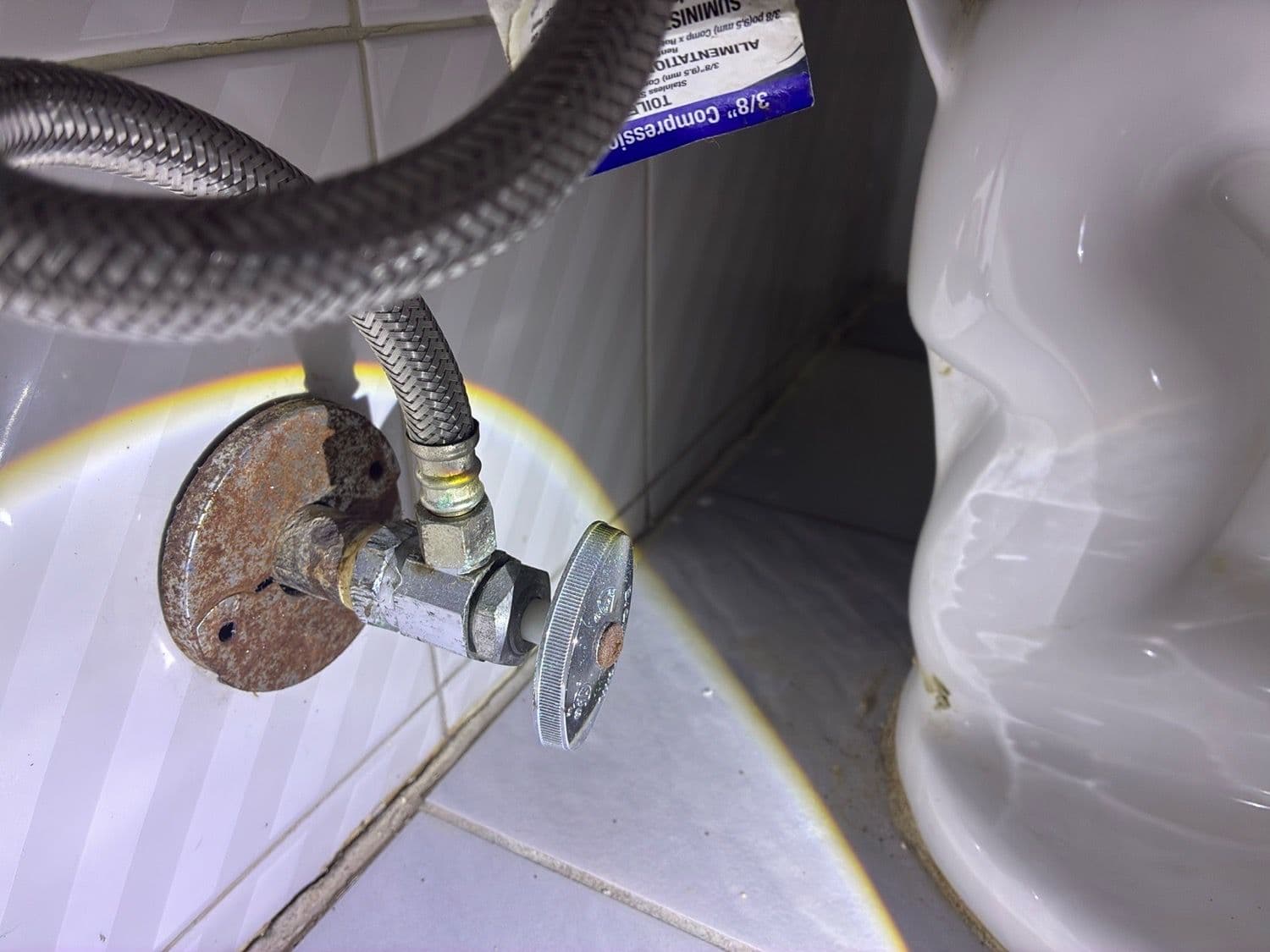
What we found: Galvanized steel supply piping in an older home was flagged as a safety and immediate-attention item. Galvanized pipes typically last 40 to 60 years and can corrode on the inside, restricting water flow and affecting water quality. We recommended a plumbing contractor evaluate the system and consider replacing it with copper or PEX. In the same home, we also found corroded, aging copper lines that can develop pinhole leaks.
HVAC (Heating and Cooling)
In Tampa, air conditioning is essential. The inspector will test system operation, check the condition of the air handler, condensate line, and outdoor unit, and note the age of the equipment. A failing A/C can be a major expense, so read this section of your report closely.
What we found: The A/C condensate drain line had no insulation around it. In Florida's humidity, an uninsulated line can sweat, dripping onto building materials and leading to water damage and mold growth. It's an inexpensive fix: wrap the line in foam pipe insulation.
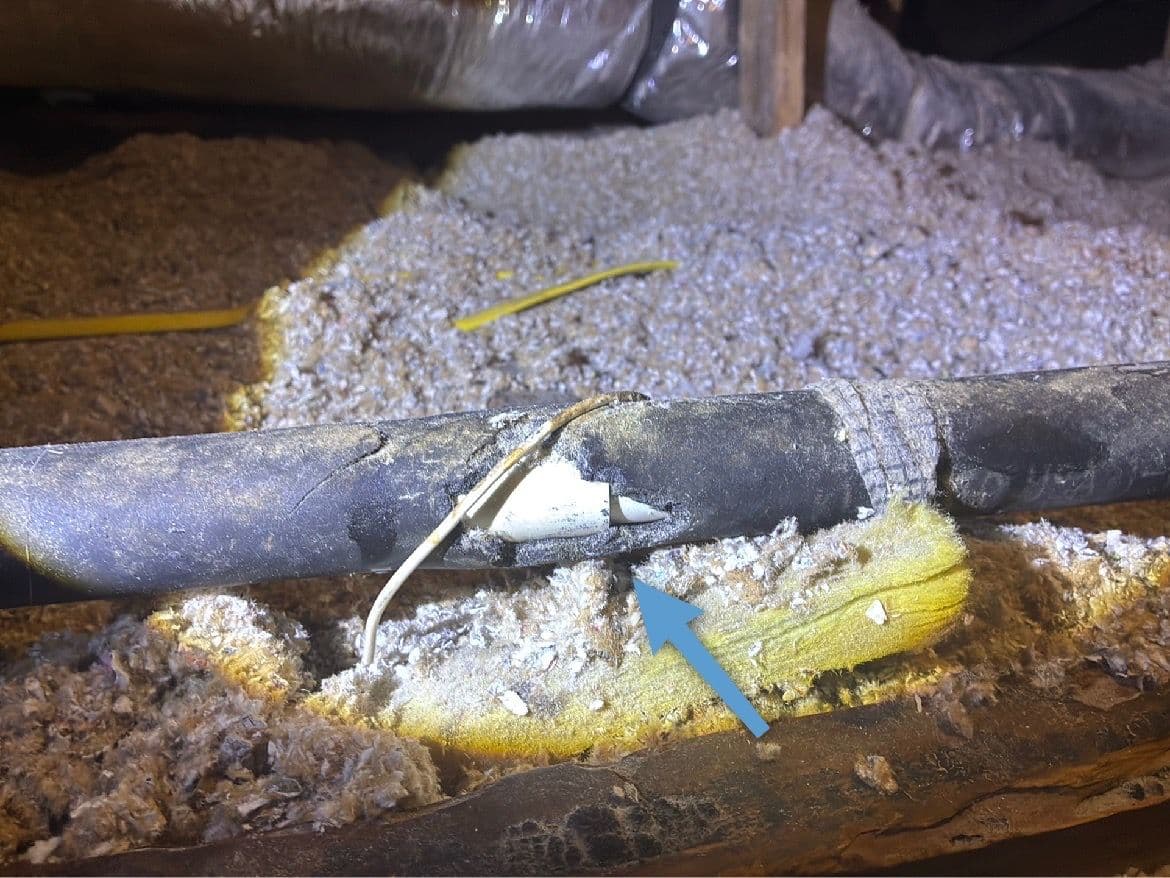
An A/C condensate line with missing insulation, marked by the inspector.
Interior Rooms and Components
Inside the home, your inspector looks at:
- Walls, ceilings, and floors for stains, cracks, or damage
- Doors and windows
- Kitchen appliances included in the sale
- Bathrooms, including fixtures, ventilation, and signs of moisture
- Stairs and railings
What we found: The wood floor inside a hallway closet showed moisture damage, a sign of water infiltration or long-term humidity exposure. Hidden spots like closets are easy to overlook on a showing, but they often reveal leaks. We recommended a flooring contractor assess the damage and the source of the moisture.
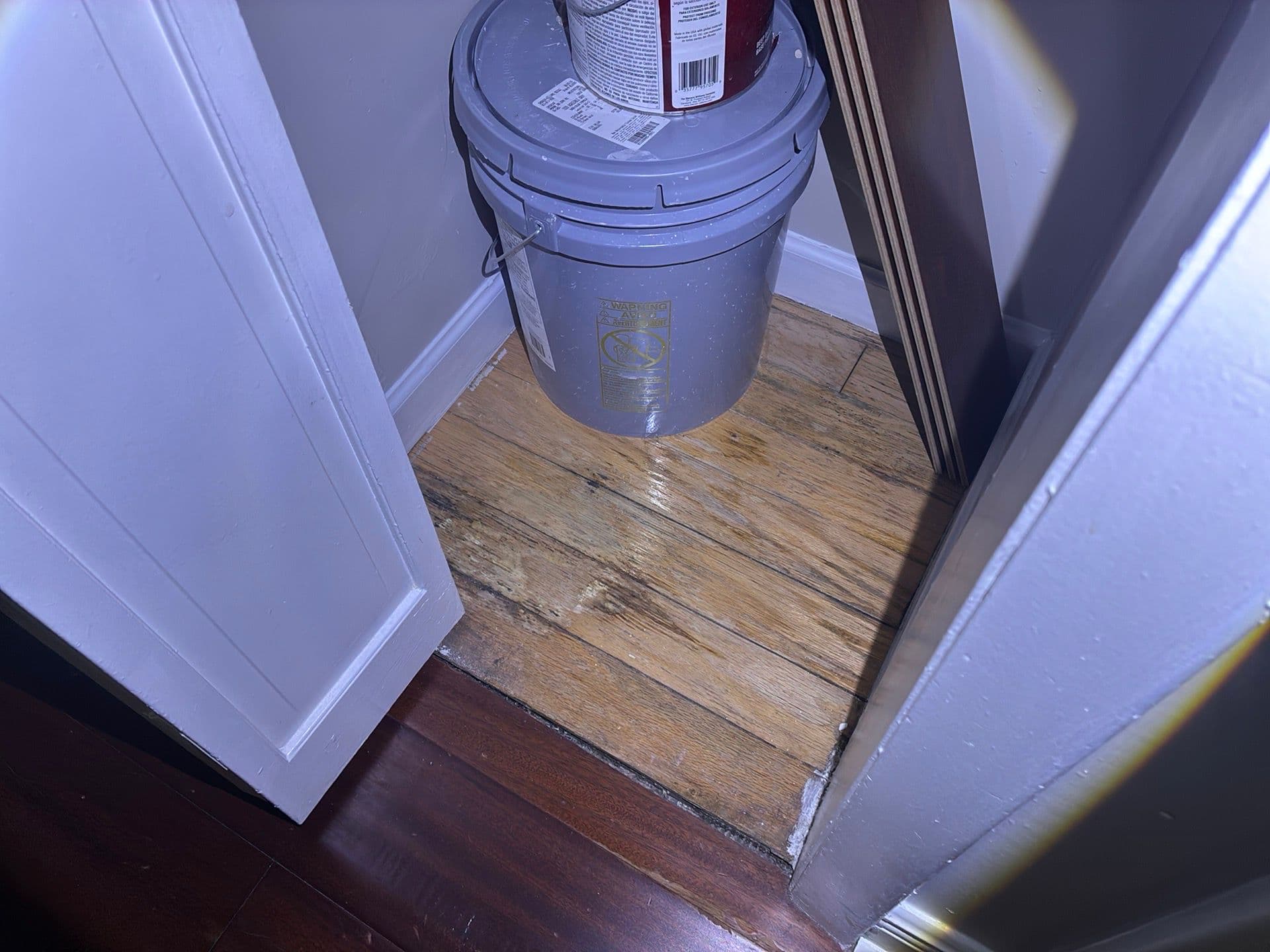
Moisture-damaged flooring in a hallway closet, found during a Cooper home inspection.
Water stains and musty odors get extra scrutiny because of Florida's humidity.
What a Standard Tampa Home Inspection Doesn't Include
A standard home inspection covers the visible, accessible major systems. These related services are separate, and Cooper Home Inspections offers many of them as add-ons that can be scheduled with your inspection:
- Wind mitigation inspection, which can lower your homeowners insurance premium
- 4-point inspection, often required by insurers on older homes
- Sewer scope inspection, a camera inspection of the lateral sewer line
- Mold inspection and indoor air quality testing
- Pool and spa inspection
If you're buying in the Tampa area, ask about these up front. Wind mitigation and 4-point reports in particular can save you money or help you secure coverage.
Frequently Asked Questions
How long does a home inspection take in Tampa?
Most inspections take about two to four hours, depending on the size, age, and condition of the home and any added services.
Should I attend my home inspection?
Yes, when possible. Attending the final portion lets you see key findings, learn how the home's systems work, and ask questions before you receive the written report.
Does a home inspection include a wind mitigation report?
Usually not. Wind mitigation is a separate report, but it can be scheduled during the same visit and may lower your homeowners insurance premium.
Can a home fail a home inspection?
No. An inspection isn't pass/fail. It documents the home's condition so you can negotiate repairs, request credits, or decide whether to move forward.
When should I schedule my home inspection?
As soon as possible after your offer is accepted, because the inspection period in a Florida purchase contract is limited.
Why a Home Inspection Is Worth It
The findings above are typical of what a thorough inspection turns up, and most of them would have been invisible during a walkthrough. An inspection gives you leverage and clarity: negotiate repairs or credits, plan for maintenance, or walk away if the issues are bigger than you're comfortable with.
Schedule Your Tampa Home Inspection
Cooper Home Inspections is a firefighter-owned, licensed and insured team serving Hillsborough, Pinellas, and Pasco counties. You'll get a clear, photo-rich report within 24 hours, with thermal imaging and moisture screening where appropriate.
Schedule your inspection or call (813) 638-9912. See packages and pricing or read our customer reviews.
Cooper Home Inspections, LLC · Florida Home Inspector License #HI12235